Update
What's new in 0.9.1: ship your system as versioned releases
0.9.1 turns your design system into something you can version and ship. Cut a release, freeze the whole system at that version, and let Figma and code pull it on their own schedule. Plus a batch of new components and a round of UI polish.
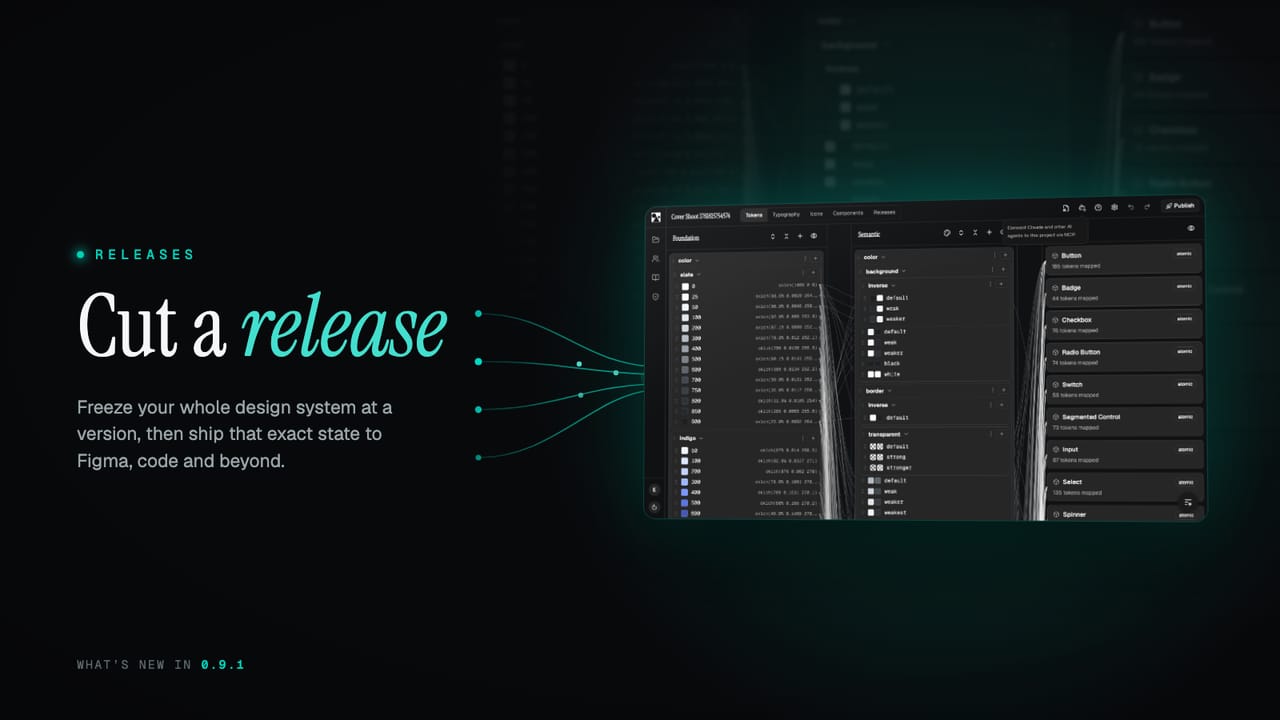
Up to now your system was always live and always changing. That is great while you build, and a problem the moment other people depend on it. 0.9.1 lets you cut a release: freeze the whole system at a version, give it a number, and ship that exact state to everything that consumes it.
What's new at a glance
- Releases. Freeze your whole system at a semantic version and publish it.
- Three channels at once. A release goes out to the Figma plugin, an npm package and a standard token export.
- A full history. Every release is kept, with its status and where it shipped.
- More components. A batch of new components landed in the library.
- UI polish and fixes. Clearer states, tidier project views, a round of bug fixes.
Cut a release, freeze a version
Hit Publish and you get a summary of everything that changed since your last version, grouped the way your system is: tokens, themes, text styles, icons, components and fonts. You can see at a glance whether this is a small fix or a big change before you commit to it.
Give it a version number in plain major.minor.patch form, add release notes if you want them, and publish. Most projects start at 1.0.0. From there you bump the patch for fixes, the minor for new things, and the major when something changes in a way consumers need to know about. The version becomes a frozen snapshot of the entire system at that moment, and it never moves again.
What your subscribers get
A release is not just a record, it is the thing your team actually pulls from. Publish once and the same version is ready in three places:
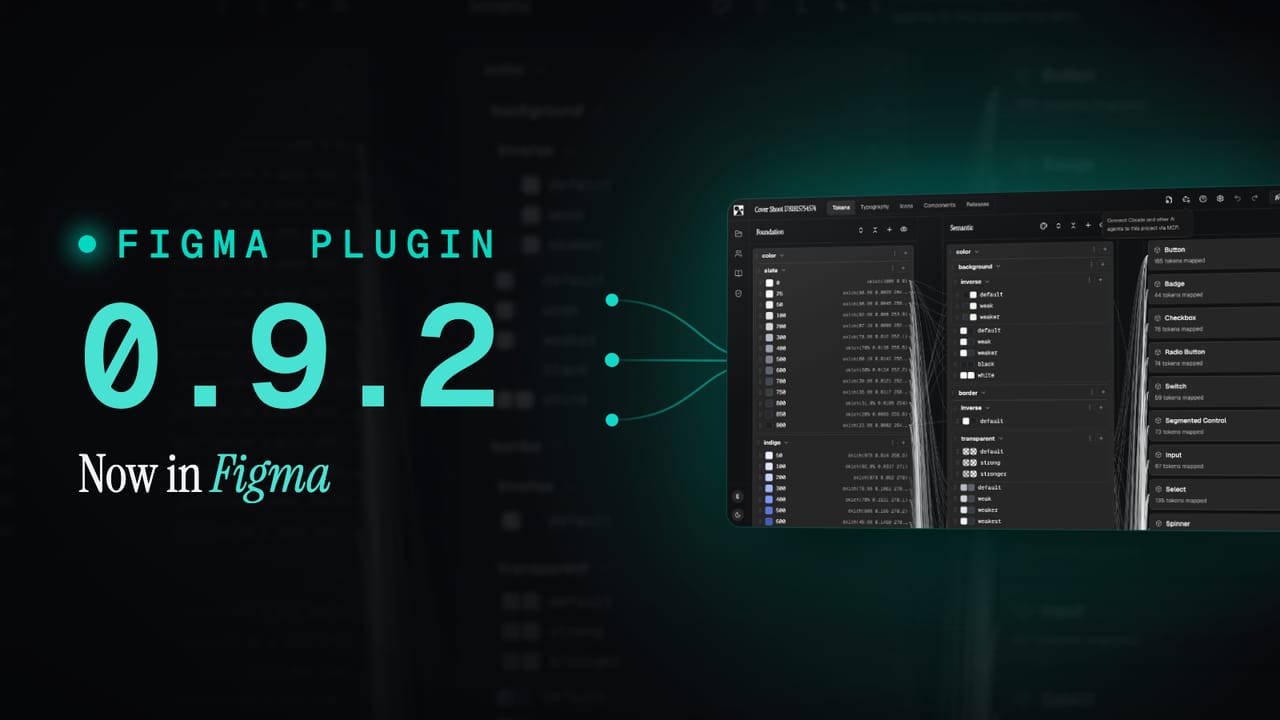
- Figma. The plugin can sync that exact version into a file, so design picks up the change without anyone re-mapping variables by hand.
- Code. The release publishes as a versioned package your build can install and pin, like any other dependency.
- Anywhere else. A standard design-token export drops out alongside it, ready for whatever pipeline needs the raw values.
Because every consumer points at a version rather than the live project, nobody gets a surprise change in the middle of their work. Design and code update when they choose to, and they always update to the same thing.
Every release, on the record
The new Releases tab keeps the full history for a project: every version, when it was created and published, where it shipped, and its release notes. If a publish ever fails partway, it is marked clearly and you can retry it without starting over. It is the audit trail for your system, so you can always answer "what was in v1.4, and who has it?"
A versioned release turns a design system from a moving target into something a whole team can build on with confidence.
Why this matters
More components
The component library grew this release. New additions cover more of the everyday interface, including tabs, an accordion, tooltips, toasts, a slider and a segmented control. Each one is token-driven like the rest, so it inherits your themes and ships in the same release as everything else.
UI polish and fixes
Alongside the headline work, this release tidies up a lot of small things: clearer empty and loading states, calmer project views, and a round of bug fixes across the editor. Nothing you have to learn, just fewer rough edges.
Have a look at the features page for the bigger picture, or the pricing page to see where releases fit. More is on the way shortly.